Outdoor Lighting Trends to Avoid: 6 Costly Mistakes for Your Yard
Upgrading your exterior illumination is one of the most effective ways to enhance curb appeal, expand your evening living space, and improve property security. When executed thoughtfully, a well-designed lighting scheme highlights architectural textures, guides foot traffic along garden paths, and creates a warm, welcoming ambiance.
However, social media and home improvement forums are constantly inundated with fleeting design fads. Many of these popular concepts look striking in a staged photograph, but they quickly fail in everyday residential environments. Installing the wrong fixtures can lead to harsh glare, rapid weathering, high maintenance costs, and a dated look within a few short seasons.
As design authorities at Martha Stewart’s outdoor lighting analysis have pointed out, several trendy exterior lighting ideas often turn out to be poor investments. If you are planning an exterior remodel, here is a detailed look at the key outdoor lighting trends to avoid, why they fail, and the timeless alternatives that deliver lasting value.

1. Plastic Rope and Exposed LED Strip Lighting
Rope lights and self-adhesive LED tape lights have become a common DIY trend for wrapping deck railings, lining retaining walls, and outlining garden beds. While they are marketed as an easy way to achieve continuous modern illumination, they rarely deliver professional results outdoors.
Why This Trend Fails
- Premature Weathering: The clear plastic sheathing on retail rope lights breaks down quickly under direct ultraviolet (UV) exposure. Within one to two summers, the tubing turns brittle, yellows, and fogs up, drastically diminishing light quality.
- Commercial Appearance: Exposed LED ribbons create visible “hot spots” where individual diode points are reflected on surfaces. This often produces a cheap, commercial look rather than a warm residential feel.
- Sagging and Detachment: Standard exterior adhesives fail after exposure to rain and thermal expansion. The resulting sagging cords look sloppy during daylight hours and create tripping hazards along ground transitions.
The Better Alternative: Hardwired Hardscape Fixtures
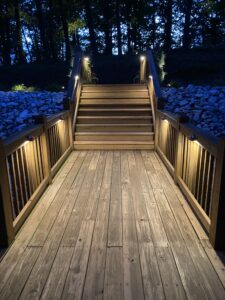
Instead of running loose rope lights, choose integrated low-voltage hardscape lights. These compact, solid-metal fixtures tuck discreetly beneath retaining wall caps, deck steps, or outdoor kitchen countertops. They project a smooth, downward wash of light without revealing the bulb or fixture body.
2. Clear Glass Hanging Pendants in Exposed Areas
Hanging an oversized glass lantern or clear glass pendant over a covered porch or outdoor dining table is a popular design choice. While glass fixtures look stunning in interior entryways, placing them outside introduces significant maintenance headaches.
Why This Trend Fails
- Insect and Debris Accumulation: Outdoor lights naturally attract nocturnal insects. Clear glass enclosures quickly collect dead bugs, spider webs, dust, and pollen, turning what was once a luxury focal point into an eyesore.
- Water Spots and Fogging: Humidity, rain spray, and temperature swings cause mineral spotting on glass panels that requires frequent scrubbing to keep clean.
- Unshielded Glare: Clear glass does nothing to soften intense light bulbs. When seated nearby, guests are often blinded by direct filament glare at eye level.
The Better Alternative: Solid Metal and Shielded Downlights
Opt for fixtures crafted from solid cast brass or marine-grade copper that feature downward-facing, shielded apertures. If you prefer decorative pendant fixtures, choose models with seeded or frosted glass that diffuse light softly and disguise day-to-day dust between seasonal cleanings.
3. Gimmicky Color-Changing RGB Systems
App-controlled color-changing LEDs (RGB systems) have surged in popularity because they allow homeowners to turn their landscape purple for Halloween or green and red for the winter holidays at the push of a button.
While seasonal flexibility sounds appealing, relying on color-changing systems as your primary exterior lighting strategy is one of the most common outdoor lighting trends to avoid.
Why This Trend Fails
- The Theme-Park Effect: Vibrant neon blues, greens, and purples look artificial against natural foliage, stone, and brick. Overly saturated colors overwhelm plant textures and make high-end residential landscaping look like a commercial venue.
- Poor Color Rendering Index (CRI): RGB diodes lack the high CRI found in dedicated architectural LEDs. They fail to bring out the rich, natural earthy tones of your trees, shrubs, and hardscapes.
- Novelty Fatigue: Most homeowners find they only use saturated colors two or three times a year. For the remaining 360 days, lower-quality multi-color chips struggle to produce a true, warm-white glow.
The Better Alternative: High-CRI Warm White LEDs
Invest in dedicated warm-white LED fixtures in the 2700K to 3000K color temperature range with a CRI of 90 or higher. This spectrum replicates the golden hue of traditional incandescent light, enhancing tree bark, stone veneers, and delicate garden flowers without visual distortion.
4. Inexpensive Solar Stake Lights
Box stores and online marketplaces offer multipacks of solar stake lights at attractive price points. The promise of zero electrical wiring and effortless DIY setup makes them a frequent impulse purchase for homeowners. In practice, however, they represent one of the least durable exterior investments.
| Feature | Low-Cost Solar Stakes | Low-Voltage Hardwired Systems |
| Light Output (Lumens) | 5 – 20 lumens (fades overnight) | 100 – 300+ consistent lumens |
| Lifespan | 1 – 2 seasons | 10 – 20+ years (brass/copper) |
| Weather Resistance | Brittle plastic; prone to heaving | Solid cast metal, frost-proof stakes |
| Light Quality | Cool blue (5000K – 6000K) | Warm architectural white (2700K – 3000K) |
| Control Options | Dawn-to-dusk only (unreliable) | Smart timers, astronomical clocks, zones |
Why This Trend Fails
- Inconsistent Illumination: Solar lights depend entirely on direct daytime sunlight. During overcast winter days or on shaded walkways, they produce a weak glow that burns out after only a few hours.
- Cheap Construction: Lightweight plastic stakes easily break during lawn maintenance, heave out of the ground when soil freezes, and sit at crooked angles along walkways.
- Stark, Cold Color: Most budget solar fixtures emit an icy, 5000K blue-white light that looks cold and unwelcoming against home exteriors.
The Better Alternative: Low-Voltage Architectural Lighting
A professional low-voltage (12V) system powered by an efficient central transformer provides dependable, brilliant light regardless of tree cover or weather conditions. Heavy-duty cast brass fixtures anchored firmly into the ground maintain their alignment and performance for decades.
5. Oversized Fixtures That Overwhelm the Architecture
Statement fixtures have their place, but installing oversized exterior lanterns and wall sconces that do not match the scale of your entryways is a major design misstep.
Why This Trend Fails
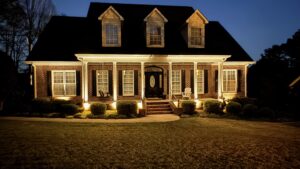
When a lantern is too large for its mounting surface, it competes with trim details, crowds front doors, and distracts from the home’s overall architecture. Conversely, choosing fixtures that are too small looks equally unbalanced.
In landscape design, the goal is always to showcase the effect of the light, rather than draw unnecessary attention to the hardware itself.
The Better Alternative: Balanced Scaling and Hidden Light Sources
Follow architectural sizing guidelines when choosing decorative wall sconces. As a standard rule of thumb:
- For a single entry lantern, the fixture should measure approximately one-third the height of the front door.
- For paired lanterns flanking a doorway, each fixture should measure approximately one-fourth the height of the door.
- In garden beds and along walkways, prioritize low-profile, discrete fixtures that blend seamlessly into the surrounding mulch and plant beds.
6. Blanket Floodlighting and Blinding Security Lights
Mounting massive, twin-bulb motion floodlights high on the garage eaves is a traditional approach to home security, but blanket illumination has significant aesthetic and functional drawbacks.
Why This Trend Fails
- Harsh Glare and Stark Shadows: Blasting a yard with high-wattage floodlights creates extreme contrast. Areas right beneath the beam are painfully bright, while adjacent areas become pitch black, creating hiding spots for intruders and disorienting visitors.
- Light Pollution: Unshielded floodlights spill into neighboring yards and second-story windows, disrupting sleep patterns and creating neighborhood friction.
- Erases Visual Depth: Flooding an entire yard with flat light washes out the natural texture of plants, stone pathways, and garden dimensions.
The Better Alternative: Layered, Zoned Illumination
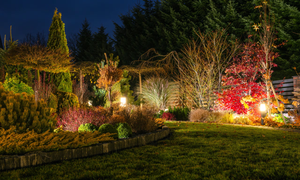
A layered lighting plan combines ambient path lighting, gentle perimeter wash, and targeted task lighting. By illuminating multiple distinct focal points at low, comfortable wattages, you eliminate deep shadows, secure your property, and preserve a relaxing evening atmosphere.
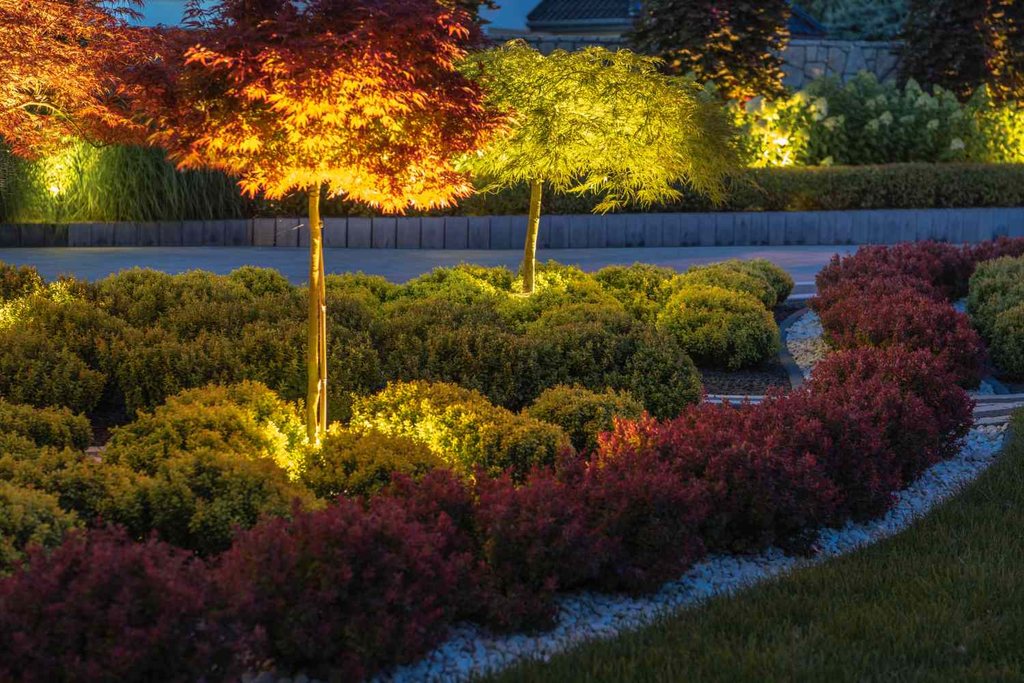
Summary of Outdoor Lighting Mistakes and Solutions
| Trend to Avoid | Common Issue | Long-Term Solution |
| Plastic Rope Lights | Yellowing, sagging, visible diodes | Hardwired low-voltage hardscape fixtures |
| Clear Glass Pendants | Trapped insects, water spots, glare | Shielded fixtures with frosted or seeded glass |
| Saturated RGB Systems | Artificial carnival look, poor CRI | High-CRI warm white (2700K – 3000K) LEDs |
| Solar Stake Lights | Dim output, crooked stakes, short life | Low-voltage wired brass/copper path lights |
| Oversized Fixtures | Overwhelms exterior door proportions | Proportional sizing (1/3 or 1/4 door height) |
| Blanket Floodlights | Blinding glare, light pollution, deep shadows | Multi-layered, shielded accent and path lighting |
Creating an Exterior Lighting Design That Stands the Test of Time
Avoiding short-lived exterior trends protects your investment and ensures your outdoor living spaces remain comfortable and beautiful year after year. When planning your lighting layout, focus on quality materials like solid brass, copper, and stainless steel that age gracefully in outdoor conditions.
By prioritizing gentle illumination, proper fixture scaling, and warm color temperatures, you can create a custom lighting system that elevates your property value, keeps your family safe, and delivers effortless curb appeal every time the sun goes down.